Friday, August 02, 2013

Blue Ruin

Blue Ruin centres around Dwight, who lives rough in a seaside town, but gets some news that suddenly triggers a sense of purpose and he sets off on a mission to rural Virginia which stirs up a hornets nest of trouble. While Dwight turns out to be resourceful under pressure, he is not as gun happy as his enemies and he can't always think his way out of danger.


There is a sense of mystery in Blue Ruin because all the character know the back story so there is no reason for them to explain anything to each other, leaving the audience eager to interpret any scraps of information about the past to make sense of what they are watching. This is a refreshing change from most films where plots tend to be over explained or signalled.

This is very much a solo piece. Dwight is effectively in every scene with other characters arriving to help or hurt him. As a homeless man Dwight is an unusual choice for an everyman hero, but as we see him struggling against the odds and with various moral dilemmas that are usually glossed over in thrillers he becomes someone we can identify with. All the loose ends are very neatly tied up in the final scene as if to say to the audience - keep your soft city ways this is how we do things in Virginia.

It looks like Blue Ruin was partially crowd funded.

Ian's rating 3/5

The East

The East stars Brit Marling as Sarah, an ex-FBI agent, now working for upmarket security company Hiller Brood when her boss (Patricia Clarkson - looking suitably evil) sends her undercover to infiltrate an eco-terrorist group that have been attacking Hiller Brood clients. Displaying admirable field craft she tracks down the group and convinces them to accept her, though only the alpha female (Ellen Page) is suspicious of the wounded blonde new comer. The small bunch of 20 somethings live a somewhat idyllic life in an abandoned house in the woods. Between bonding experiences drawn from college life and new age cults the group plans jams (flamboyant eco-terrorist attacks) for which they are never short of resources.

The surprises and plot twists are effective, though the potential triangle between Sarah, Izzy and eco hunk, Benji (Alexander Skarsgård), is not fully explored. As an intelligent thriller this is in the same company as Edge of Darkness, though it suffers from being too black and white, it could have been improved with some more moral ambiguity. For some reason Brit Marling starts the film looking far too young (say 19) for someone on their second career but ends the film a few weeks later looking like she has aged 10-15 years. Despite this long list of failings the pacing of the film is good and most of these faults are only noticeable retrospectively. The main fault with The East is the wimp-out ending as the credits roll.

Ian's rating 3/5

The Best Offer

Perfect clothes, perfect furnishings, perfect make-up, perfect looking extras, in other words perfect mise-en-scène. Populated by bunch of off-beat to downright weird characters. Virgil Oldman (Geoffrey Rush) is Italy's premier art auctioneer, always dines at the same restaurant, sitting alone facing the wall while wearing gloves. He is completely confident of his superior knowledge of art, and is not above exploiting that fact to his financial advantage from time to time. One of his two friends is an electro-mechanical genius who can repair or rebuild anything and is a babe magnet. The woman at the centre of the film, Claire Ibbetson, is an agoraphobic who no-one has seen for 10 years. She draws Oldman out of his routine with a bizarre series of phone calls and outrageous requests that no-one else would tolerate. Even some of the minor characters are outlandish.

Actually none of these characters or their situation would be possible in real world and that should cause the penny to start dropping. If they were more realistic I would class The Best Offer as a rom-com, mystery thriller. But given the combination of a magically perfect setting with larger-than-life characters I'm going out on a limb and classifying this as a modern fairytale. It is pity that there isn't a bit more humour.

Even though the film is set in Italy the cast is all English speaking. It is as if the population of Italy has been replaced by British people, though with Italian tastes and Italian clothes! Like art itself there is more style than substance here.

Ian's rating 3/5

Thursday, August 01, 2013

In The House

Even if you were a discontented middle age school teacher saddled with the worst class you have had the misfortune to timetabled for, being married to Kristin Scott Thomas should cheer you up n'est-ce pas?

Apparently not if you are the perpetually dour Germain, whose already low opinion of French teenagers is lowered further by marking essays on the topic of "what I did this weekend". Except an intriguing effort by Claude Garcia, where he describes visiting his new friend Rapha with particular attention to Rapha's mother and finishing with "to be continued". Claude is as good as his word and further episodes are forth coming and Germain starts giving extra tuition and ambiguous messages which Claude rightly interprets as encouragement to continue his voyeuristic invasion of Rapha's home and his infatuation with "the most bored woman in France". This is not going to end well as Claude takes advantage of Germain's eagerness for more episodes and with the amoral Claude in charge Germain's job and life are in jeopardy.


I'm sure school teachers will identify with the detail of school life from a teacher's point of view in the first half of In the House. The second half with conflict between pupil and teacher and between Claude and Rapha's family is part comedy and part psychological mystery. The ending is the weakest part where after the dust has settled Claude and Germain meet up again.
Trailer

Ian's rating 4/5  Anne's rating 2.5/5

The Act of Killing

A more efficient way to kill Communists
It is ambitious to try to get unconvicted mass murderers to talk on camera about killing people. Who would incriminate themselves like that?

Actually it seems that in Indonesia it is not too difficult. Early on in the documentary The Act of Killing, Anwar Congo admits that he killed lots of "communists" in 1965/6, other people interviewed either admit to their part in the massacre, or if younger they openly admire the killers.

The killings of 1965/6 were carried out on the initiative of the Indonesian Army and General Suharto who would then run the country until 1998. In their narrative the killings were necessary to 'save' Indonesia and hence the killers are heroes rather than criminals. Since 1998, the army, paramilitaries and many of the leaders from the Suharto period survive, along with that narrative. No-one has been put on trial.

Outside Indonesia the killings were initially seen as a 'good thing' by Australian Prime Minister Harold Holt in 1966 when he told The New York Times "With 500,000 to a million communist sympathisers knocked off...I think it's safe to assume a reorientation has taken place". But the West changed, it was no longer popular to view mass killing of people for their political views as a 'good thing' and the killings became lost in a guilt driven collective amnesia (a similar collective amnesia existed for decades about the 1918/9 Influenza Epidemic that killed far more people in one year than died in World War I).

In this environment Joshua Oppenheimer was faced with an unusual problem for a documentary film maker. It was easy to get his subjects to admit to the killings, in fact they almost gloated about it and certainly gloated about the power it brought them. The tricky bit was to get them to understand that what they did was wrong. While there are occasional attempts at self censorship, these usually occur after an enthusiastic outburst.

The Act of Killing is also a film about making a film. Before the killings Anwar and his pals in Medan were very minor gangsters scalping movie tickets because they were obsessed with American films. Joshua Oppenheimer encourages his subjects to re-enact their killings, in fact to help him make a film about themselves. Anwar Congo, his younger friend Herman Koto and members of the Pemuda Pancasila paramilitary group led by a cabinet minister enthusiastically join the project. Some of the scenes are dream sequences (both nightmares and happy musical / dance scenes) where Anwar and Herman play out the emotional consequences from their point of view (and we can see influences from film genres they've enjoyed). For reasons that are not explained Herman plays many of these scenes in drag.

A commonly repeated mantra in the Pemuda Pancasila is that the word "gangster" means "free man" in English. Where "free" implies free from the restraints of the law. And that Indonesia needs such "free men" to "get things done". It certainly seems that the culture of intimidation and corruption that came to power in 1965 is alive and well in modern Indonesia. It also means that Anwar et al are surrounded by people who steeped in knowledge that the killers of 1965 are heroes, a ready made support network.

The Act of Killing is a Jacksonishly long (159 minutes), somewhat repetitive and jumps back and forth (possibly over several years of filming). But eventually we reach the point moment that Oppenheimer was waiting for.

In my view The Act of Killing reinforces the ideas that a) normal (or close to normal) people are completely capable of evil and b) if you have a support network telling you what you did was justified then you probably will not recognise what you did was wrong.
Trailer
Trailer

Ian's rating 4/5

My Sweet Pepper Land

An independent Kurdistan is one of the more intriguing possibilities that arose out of 20 years of conflict between Iraq and the USA. While that possibility is looking less likely than it did in say 2006, it has produced an autonomous region which in turn has led to Kurds doing things that they wouldn't otherwise be allowed to do. Such as producing feature films.

My Sweet Pepper Land follows our two protagonists as they each run away from family pressure to meet at the end of the earth, namely tiny an Iraqi Kurdish village near the borders with Iran and Turkey. The village has been cut off from the rest of Iraq since Turkish war-planes bombed a bridge 2 hours walk away. The main industries are smuggling alcohol into Iran, guns into Turkey and expired medicines back again all on horse back.


Baran was a hero in the peshmerga during the war and has since found it difficult to adjust to peace. Neither a job as a city police officer nor living with his mother appeal, so he requests a transfer. Meanwhile Govend's horde of brothers want to her to get married, but she wants to return to her teaching job at the remote village school. Both soon clash with the local chieftain Aziz Aga. Aziz Aga doesn't want an independent single woman in the village and neither does he want anyone interfering with his self appointed position as local enforcer and chief smuggler. Baran announces his intention to enforce the law impartially rather than just collect his pay cheque but rethinks this ideal once he meets the women's branch of the PKK.


My Sweet Pepper Land could all too easily be a political film, but the status of women is the only political issue addressed. With a local tough man and his henchmen, a straight-up new-in-town sheriff and a plucky independent woman; with guns, horses and wild countryside; with everyone's honour at stake and a sound track that in places is suspiciously close to Ennio Morricone's in The Good, the Bad and the Ugly we are in no doubt as to the genre. The western is dead in America but it still works in this corner of the world where the rule of law hasn't quite arrived.

Everyone knows what to expect from a western, so we get taken by surprise when My Sweet Pepper Land deviates from our preconceptions of the genre. The seriousness of the subject matter is liberally punctuated by deadpan humour which contrasts with the serious personalities of the protagonists.

Govend's prize possession is her Hang, a modern Swiss musical instrument that features liberally in the soundtrack.

Ian's rating 5/5 Anne's rating 5/5

Sunday, July 28, 2013

Like Someone in Love

Akiko and Takashi
Like Someone in Love is a lopsided triangle of a movie. The base of the triangle is Akiko, a perpetually tired and badgered call girl / university student. She wants to study or sleep and hence escape her troubles, but finds herself cornered by the expectations of her pimp, her grandmother, her boyfriend, her client and his nosy neighbour. These expectations of her are ones that she is at least partly responsible for creating. All but one of these characters are desperate for love in various ways that impact on Akiko over 24 hours.

In contract to Akiko's passive role, her client Takashi, a retired professor, steals the show; metamorphosing from lonely old man, through reluctant agony aunt to knight in shining Volvo. Ironically Akiko's volatile boyfriend, the shortest side of this triangle, has the most honest intentions of the three but also poses the most danger.

In Like Someone in Love we are watching ordinary people doing ordinary things while trying to cope with their own and each other's desires. Everything is laid back and taken at a measured pace. The very ordinary interiors are beautifully shot. While some reviewers didn't like the ending I preferred it to some of the more drawn out endings I've seen lately. I left the movie unwinding it back looking for a point at which Akiko could have avoided the tragedy to see if it was inevitable or not.

Ian's rating 3/5

Saturday, July 27, 2013

Blancanieves

Why would someone want to see a silent movie in 2013?

The novelty factor? Curiosity? Masochism? Ludditism?

Actually the masochism was entirely due to sitting in row M at the Paramount (rows M and beyond are not suitable for people with legs). It was curiosity to see a modern "silent" movie, and to see a Spanish take on the fairytale of Snow White, that got me to part with my money. As I hinted with the quote marks, Blancanieves is not entirely silent. It has sound track of music and sound effects but no spoken dialogue. It follows the original silent movie techniques in terms of its almost square aspect ratio, black-and-white photography, over acting and intertitles. The intertitles were in English in the version shown at the Film Festival. The almost square aspect ratio and the 1920's setting sells this film as a silent movie and the over acting meshes well with the fairytale script.

In terms of 21st century mores, Snow White is one of the kinkiest of fairytales. In today's terms explain why it is OK for a teenage girl to move in with seven older men, or why it is OK to put a (presumably dead) girl's body on public display in a glass coffin, or let a random guy sexually molest her? This sort of behaviour is only acceptable in fairytales. In Blancanieves we are in 1920's Spain and Carmencita is the daughter of a widowed matador who marries the scheming Encarna (whose sexual proclivities normalise the kinkiness of the Grimm Bros plot). Carmencita's childhood and Encarna's torment of her take up rather more of the film than they should but the pace picks up a bit once the dwarves come on the scene. Here we feel we are on familiar territory but we should realise that this version of Snow White has not been following the Grimm Bros (or Disney) plots particularly closely and while Encarma's demise is satisfying, Blancanieves' fate deviates from expectation to remind us that this version of the story is for adults.
trailer
Trailer

Ian's rating 3.5/5


Outrage Beyond

In case you didn't know yakuza usually wear black and always drive black cars. Or at least that is how Takeshi Kitano portraits yakuza. Middle aged, senior yakuza look and act like successful businessmen. Young upstarts look like successful rap-stars in suits and the footsoldiers look like secret service agents escaped from a Hollywood film. The cops dress like they got their clothes from a Salvation Army store. This is important because clothing implies status within your organisation and status is important in Outrage Beyond, as is the power of the organisation you belong to. Even the two most important yakuza clans acknowledge that the police, as part of the government, are more powerful than they are and so the detectives are accorded more respect than their dress sense would suggest. In particular this allows the ever smiling Detective Kataoka access to the top yakuza executives whenever he feels like it.

Detective Kataoka of the Tokyo organised crime squad doesn't seem have much reason to smile, the film starts with a double murder with the potential to become a political scandal and his bosses want revenge on the Sanno clan. Kataoka's strategy is to provoke a clan war between the Sanno clan and the Osaka based Hanabishi clan. This proves unsuccessful as does his attempt to stir up trouble with the soon to be released from prison Otomo (played by Takeshi Kitano). Despite the disapproval and bleak assessments of his more junior partner, Kataoka is an energizer bunny and eventually his attempts to stir up trouble pay off and we get to see a series of set-piece yakuza fights punctuated by negotiating and double crossing.

While you could watch Outrage Beyond for the stylish violent set pieces, it is a better experience to try and follow all the plot lines and plot twists. There is more plot and more characters to keep track off than in two or three Hollywood crime films.  Even a few unexplained bits of plot that might imply a sequel.

Trailer
Trailer
Ian's rating 3/5

Wadjda

Wadjda is a ten year old girl who is an only child and she's a little different from her schoolmates. Her best friend is the (younger) boy who lives next door. They socialize on the trip to their respective schools - she walks and he rides his bike. She's not supposed to ride a bike because she's a girl but at least her trip to school is pretty carefree compared to her schoolteacher mother's trip to work. (Women aren't allowed to drive in Saudi Arabia,  so her mother and her colleagues are picked up and driven to school by an employed male driver. And if the driver is a tosser, your choices are limited by the fact you can't drive yourself). Wadjda desperately wants her own bike and is saving to buy the one in the local store - and she's pretty enterprising. She makes bracelets to sell to her schoolmates and delivering illicit messages from her schoolmates to boys also provides income. When she finds that a school contest involving reciting the Koran has a monetary prize big enough to buy the bike, she signs up - surprising the head teacher who has her categorised as a rebel

Wadjda  was a great way to kick off the film festival.  It's the first feature directed by a Saudi woman and the first full length feature to be shot entirely in Saudi Arabia and as I was being entertained I was pleased to feel that a local was telling me "so this is how it is for women in Saudi Arabia". It made me think of Pride and Prejudice - a thoroughly entertaining story, encapsulating life for women in a particular place and time, told by someone who was there. And like Britain in the early 19th Century, life for women in Saudi Arabia in the twenty-first century is heavily dependent on men  and they really need to be married to one. Life has a  bizarre focus on what random men are doing -for example, all the girls in the school playground are supposed to go inside if a man happens to be within viewing distance.

Wadjda's mum is an interesting mix of progressive and deeply socially conservative. She allows her daughter to listen to pop music, wear jeans and sneakers and hang out with her male neighbour, and yet she's horrified when one of her own friends dares to talk to a man with her face uncovered.There's a nice contrast between how she'd like the world to be and being deeply conscious of the price of inviting society's disapproval.

A great cast, a good script, an exotic location and gender issues addressed with humour make for a great watch,

Anne's rating: 4/5  Ian's rating 4/5

Sunday, May 05, 2013

Eternity

The promotional material about Eternity describes it as a sci-fi murder mystery set in the near future. The hero of the story is a policeman (detective, really)  and he and a bunch of his colleagues (all of whom have blotted their professional copybooks in some way) are being sent on a kind of crime-solving field trip with a competitive element..There's a  promotion being offered for the most successful participant. The detectives are in teams of two and each team is working on the same crime - a murder that took place in a room with one door that was in sight of all of the six possible perpetrators at the time.

Being sent on this field trip involves being translocated (a long distance version of  beaming up, Star-trek style) and being part of a computer game. As the audience we don't really know who is real and who isn't. The wooden acting and slightly clunky script could be to emphasize the fact that some of the characters are androids or game characters, or they might be a  reflection of the film's low budget.  I'm not a sci-fi aficionado but I believe the premise of  being trapped inside a game is not a new one - so that's not the reason you'd go to this film and neither are the script or the acting.

The reason to go is because Eternity is beautiful and its filmed here in New Zealand. Wellington, Napier and Auckland all feature and some of our nicest building exteriors and interiors are used. Filmmaker Alex Galvin tried very hard to make Eternity not look low budget and he certainly succeeded. Many of the buildings being Art Deco adds to the Agatha Christie feel of the mystery and the film. Expect to be wowed visually and moderately entertained by the story, and you won't be disappointed.

Anne's rating 3/5, Ian's rating 2/5

Sunday, April 07, 2013

Jack the Giant Slayer

I guess that eventually I'd end up seeing one of the current crop of fairy tale based films or TV series.
Hansel and Gretel: Witch Hunters
Snow White and the Huntsman
Red Riding Hood
Beauty and the Beast
The Brothers Grimm
Once Upon a Time (currently on TV2)
Beauty and the Beast (currently on Prime)
Jack the Giant Slayer is a fairly straight telling of the English fairy tale Jack and the Beanstalk (with less theft and more heroism). The growing of the beanstalk and fight scenes are made for 3D viewing, though have plenty of impact in 2D. While the second line of the poem no longer mentions the blood of an Englishman, the actors are British and the setting of the film is unmistakably a fairy tale version of Britain.
Fee-fo-fi-fum, ask not where this idea came from.
The fairy tale, Jack and the Beanstalk, is a story with repeated tension as Jack's curiosity and greed put him in danger again and again. Twice he is saved from the blood sniffing Mr Giant by the kindly Mrs Giant, and the third time he escapes by luck. On each occasion Jack steals from the Giants. After an exciting chase Jack and his mother chop down the beanstalk killing Mr Giant and live happily ever after on the proceeds of crime.

The film is less repetitive and introduces a Disney style princess to be rescued and married and an evil Bond style scheming villain to be stopped. This removes the dubious morality of making a hero out of a recidivist thief and pads out an otherwise trivial plot giving more opportunity for dialogue and extra characters.

Feminists might object to the cutting of both the original female characters and their replacement by nubile eye candy (Eleanor Tomlinson playing Princess Isabelle). While I can't see an obvious reason why the script writer replaced Jack's mother with an uncle, nor why there are no female giants in the film, but I can see that Isobelle serves an essential function as the central character that brings all the others together. To be lusted after and rescued by Jack and Elmont, to be a pawn in Roderick's schemes, to be captured by the giants, to be doted on by her indulgent father (played by Ian McShane) and finally to be part of the happy ending.

To be picky, the mythical kingdom of Cloister makes the perfectionist in me cringe, realistically who'd name a kingdom after an architectural feature? Kingdom of Courtyard or Kingdom of Porch anyone? As we get to see more of the (often CGI) royal palace it looks less like Hampton Court Palace (where some bits were filmed) and more like a cathedral (other bits were filmed in Wells and Norwich Cathedrals). So are we looking at kingdom that has re-purposed religious buildings? Or possibly where monarchy has supplanted religion or merged with the church?

The film is aimed at both kids and adults. It seems to have relatively modest aims of entertaining kids, parents and others with a familiar fairy tale augmented with other familiar themes and populated with characters that are easy to understand. Seen in that light I think Jack the Giant Slayer is entertaining, well paced and acted without being spectacular, challenging or memorable.

Ian's rating 2/5 Anne's rating 3/5

Wednesday, March 13, 2013

The Other Son

The Other Son opens with Joseph preparing for his compulsory military service in the Israeli Defence Force, when a doctor notices that his blood type is incompatible with his parents. It turns out that he was switched as a baby when his Palestinian mother gave birth while visiting Israel. Babies switched at birth is such a well worn plot device or trope that I half expect that characters are going to break the fourth wall to complain about it. While both families find a host of things to get upset about but script writer isn't one of them.

The story unfolds in a remarkably restrained and laid back way. This is partly because some key parts of the story happen off screen. The two families are initially brought together by the hospital when it apologies for its mistake. They find that there is a common link to France: the Jewish parents are first and second generation immigrants from France and their Palestinian brought up son has just past his baccalaureate and is about to start studying medicine in Paris. When Joseph meets Yacine the easy going Yacine teaches the more uptight Joseph how to sell ice-cream to girls on the beach. The contrasts between the two ways of life, the economic gap, the difference between being on equal terms with the soldiers verses being subject to their whims are all on show but none of it leads to any serious problems.

This is a carefully constructed film is designed to challenge ideas of genetic ethnicity and identity. While the film maker has a clear idea about that it doesn't ram them down your throat. The question of whether parents and children feel more strongly about their biological offspring or parents than they do about the relationship developed over 18 years of child rearing is raised but is not the main point of the film.

Ian's rating 3.5/5, Anne's rating 4/5

Interview with the director Lorraine Lévy.

Sunday, March 03, 2013

Sharpe's Escape

Sharpe's Escape front cover
For a change I thought I'd do a short book review.

Title: Sharpe's Escape
Author: Bernard Cornwell
Genre: Historical, War
Setting: Napoleonic Wars
Series: Sharpe
Published: 2004

I got interested in Sharpe via the ITV TV series, this novel is one of those written after the TV series.

It is 1810 and the French are making yet another attempt to invade Portugal, the Duke of Wellington leads a combined Anglo-Portuguese Army to defend Lisbon. Captain Sharpe commands the light company of the South Essex Regiment but has taken a disliking to his new second-in-command, Lieutenant Slingsby, the Colonel's brother-in-law. While implementing Wellington's scorched earth policy Sharpe makes an enemy of Ferragus, a Portuguese businessman / thug. Sharpe and his offsider, Sergeant Harper, get separated from the regiment during the retreat after the Battle of Bussaco and have a rollicking series of adventures.

Sharpe's Escape contains a couple of carefully described battle scenes, separated by some individual adventures and introducing a new, spirited and pretty girl to fall in love with our hero. The style of this Sharpe novel is pretty standard.  There is plenty of attention to military details, and a bit of social detail and historical overview thrown in. Sharpe is grumpy for much of the novel, which affects his decision making.  His confrontational nature and private vendettas with Ferragus and Slingsby drive the novel.

Unlike other British officers of the period who typically bought their commissions, Sharpe was promoted from the ranks and is a man who makes his way in the world due to his skill and resourcefulness as a soldier and inspire of his lack of social skills. This dependence on skill makes him more like a modern man and hence easier for the reader to identify with. It also makes him an outsider to the officer class, with a sergeant as his closest friend; allowing Bernard Cornwell to describe the life and concerns of both the officers and other ranks.

Sharpe also uses a Baker rifle rather than a musket or pistol. The rifle at the time was a relatively expensive high-tech weapon, issued to skirmishers rather than ordinary line soldiers. Skirmisher used tactics that seem more sensible to people from the 21st century than those used by line infantry at the time, and skirmishers also got more interesting jobs. Both of these give the author more scope for drawing the reader in and giving Sharpe opportunity to have adventures away from the Army.

Similarly Sarah Fry appeals both to Sharpe and readers because of her independence from and lack of fear of men. An attitude that probably wasn't characteristic of middle class young women of the time.

Sharpe's Escape is well paced, while there is plenty of description it rarely gets in the way of the action. A couple of passages stretch credulity but nowhere near as much as the average action film. This book kept my attention so I finished it more quickly than most books I have read in the last 12 months.

Monday, December 31, 2012

Skyfall

Skyfall opens with a chase scene. Some baddies want a list of NATO undercover agents stored on a laptop. Bond and a young female agent are hunting them through Istambul while being micro managed from London by M and her control centre minions. The chase ends with a gunshot that segues into the opening credit sequence populated with morbid graveyard motifs and in the style of 80's Bond movies.

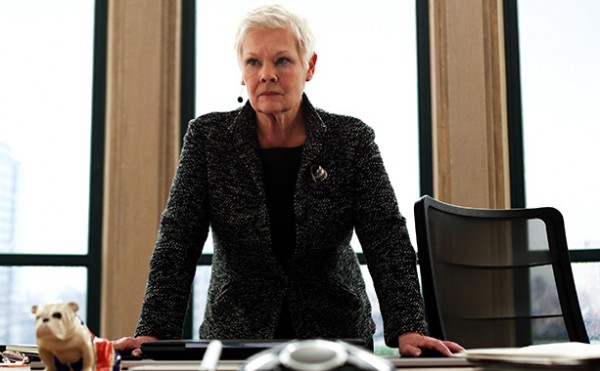
In an interesting departure from the past, the film centre's around M rather than Bond himself. This is understandable if you consider that Judi Dench's talents have been underutilised in her previous 6 films. While under political attack for loosing the list of undercover agents things take a turn for the worse as MI6 comes under cyber and bomb attack. As we know from John le Carré novels, you don't get to the top of the British secret service without having a few skeletons in the closet. M's skeleton, from her time as Hong Kong station chief, is Raoul Silva. Silva is played in scenery munching style by Javier Bardem (who played the equally evil Anton Chigurh in No Country for Old Men). Silva is a supremely resourceful, sadistic, gloating camp super-villain in the same league as Dr Julian No, Sir Hugo Drax and Ernst Stavro Blofeld.

While Bardem is having fun as Silva...
"She sent you after me, knowing you're not ready, knowing you would likely die. Mommy was very bad."
... Daniel Craig never breaks into a smile as James Bond. There are no one-liners, very limited flirting and Bond doesn't even enjoy sex with either Tonia Sotiropoulou or Sévérine. While a dour Bond is an interesting departure from the wise-cracking, devil-may-care Bond of the past, it does mean that Bond is less distinguishable from other serious and grim action heroes like Jason Bourne.

Usually Bond combats the villain's plans and superior resources with a few of Q's gadgets, a bit of help from his friends, a dose of luck and lots of spur of the moment improvisations. This time he relies largely on some highly unlikely person resources from his past, in particular a Scottish estate he inherited that has been empty and unused since his childhood but comes equipped with a priest hole, electrically lit tunnel, handy sticks of dynamite and an onsite gamekeeper! This comes across to me as a very lazy plot device from the pages of a Famous Five or Secret Seven novel.

Of the Bond girls, Naomie Harris gets the most screen time and action while Bérénice Marlohe as Sévérine (Silva's girlfriend) is the most exotic and glamorous. Miss Moneypenny get explained, which might have some relevance in a future film but was not necessary to the plot of this one.

This is a Bond movie that both looks back nostalgically at its 20 odd predecessors and breaks new ground. On the plus side giving Judi Dench a bigger role was a great idea and Javier Bardem make a good super-villain as Silva. The Bond girls are good eye-candy, as usual, even if they are under appreciated by Bond himself. The opening chase scene through Istambul and onto the Varda Viaduct is spectacular and much better than Skyfall's finale. On the negative side: not only has Bond lost his sense of fun, he has also become sentimental, and the Skyfall Lodge was a new low in script writing.

Ian's rating 3/5 Anne's rating 3/5