filmsandmore

Wednesday, November 18, 2009

Novemberkind

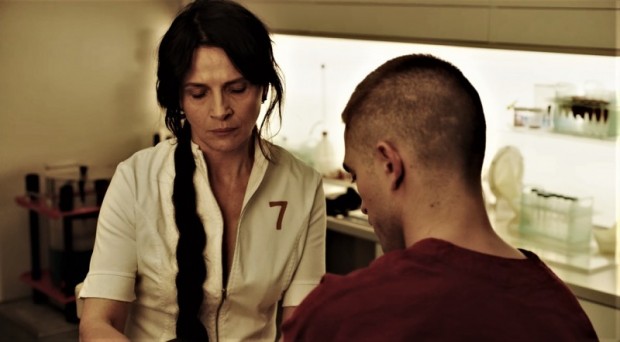
Novemberkind was the opening offering of the recent German Film Festival - which was staged to celebrate twenty years since the dismantling of the Berlin Wall. We went to the second night - apparently the first night at the Embassy was almost full. A pity, then, that the opening night crowd was subjected to such a depressing film. Not a bad film, but definitely depressing.

Novemberkind is set in roughly present-day Malchow, in what used to be East Germany. The central character of the film is Inga, a young woman who has been brought up by her grandparents believing that her Mother drowned when she was a baby. One day a slightly creepy older man called Robert (who is a professor of literature from Konstanz in what used to be West Germany) comes into the library in which she works and engages her in conversation and ends up taking her out for dinner. It emerges that Robert knew Inga's Mother and in fact she attended a writing course of his in Konstanz. So then a voyage of personal discovery begins for Inga, about what actually happened to her Mother and Father, and the audience is taken along for the ride.

The story is played very straight. As Inga makes discoveries we see the events as flashbacks, with the same actress that plays Inga playing her Mother. We never really know how she feels about her discoveries - we can only interpret from her interactions with other character in the film. There are no voice-overs, and no intimate chats with friends about what she's thinking. Robert the literature professor lurks in the background and we never get over the feeling he is just a creepy voyeur using Inga's plight as fodder for his next novel.

I think the film's raison d'etre is an illustration of the impact of Germany's East/West divide on the lives of individuals - in this case, Inga, Inga's parents, Inga's grandparents, and a Russian soldier Inga's Mother meets when Inga is a baby. If this is the case, it certainly achieves it's aim. For the audience, it's a bit of a harrowing ride,and as Ian points out, when it reaches it's conclusion there aren't many other options left. The unfolding of the plot is what makes the film interesting so I won't discuss it except to say that once Inga finds out that her Mother didn't drown 25 years ago but escaped to West Germany the big question is How could a Mother abandon her baby? And you'll have to watch the film to find out the detail, but the answer to the big question is that she couldn't.

I thought this was quite a powerful film and somewhat harrowing. I wasn't uplifted and so I hesitate to recommend it, but I wasn't bored.

Anne's rating 2.5/5 Ian's rating 2/5

Tuesday, November 03, 2009

(500) Days of Summer

(500) Days of Summer is a romantic comedy that strives to be different and quirky. Largely it succeeds. Its point of difference is that it shows a relationship from a male perspective and from a male perspective that is the opposite of usual US TV/Film stereotype. Tom is an unabashed romantic, a believer in "one true love", while Summer (the girl he falls in love with) is more cynical and wants commitment-free fun. This film is also quirky in that it is not shy at quaintly imitating a slew of other film conceits (the all-knowing narrator, inter-titles, non-chronological scenes, a split screen scene, a song and dance routine, gratuitous animation, a wise-beyond-her-years sub-teen little sister, etc).

The fact that the story is told from Tom's point of view (slightly disguised by having an unidentified third person narrator) is both refreshingly normal (as opposed to film-like) and also annoying. It is normal in that, unlike many films, we don't have a God-like understanding of both the main characters. Just as in real life where we often don't understand those around us, including our nearest and dearest. It is annoying because whereas it is clear where Tom is coming from, Summer is an enigma - and her enigma is more interesting than Tom's character.

Tom is surprised that Summer agrees to go out with him (this might have something to do with her being new in town). He continues to pursue her and apart from repeatedly saying that she doesn't want a relationship and that they aren't having one, she goes along with him. This confuses the poor guy, who blindly pretends a relationship exists. While we are wondering why would such a beautiful woman go out with a guy who perpetually wears sweaters in L.A.? Why does she go for a walk in the middle of the night, in the rain, in downtown Los Angeles to apologise for not wanting to have sex when she is angry for him behaving like an idiot? Why does she break up with him? And isn't this counter to her often stated position that she doesn't believe they are having a relationship?

The old world décor, unfashionable clothes, rain, overcast weather, grungy buildings, children biking in CBD led me to the erroneous belief that the film was set in some city in the north or north east of the US so the announcement that this was Los Angeles came as a surprise. So perhaps there are parts of L.A. that are not all sunshine, mirror glass, fashionable clothes and given over to cars.

The plot is simple even by romantic comedy standards: Boy is obsessed with gorgeous woman (who he initially and correctly classifies as out of his league). She tells him up front that she's happy to have a bit of fun with him but is not interested in a relationship. He ignores this to his peril. Later she dumps him. He takes it hard. We are not watching this film for the plot.

The supporting cast are barely more than extras with lines to say. Tom gets more cynical towards the end but that is a side effect of depression rather than character development. Summer is more a collection of confusing behaviours than a personality we get to understand. We are not watching this film for its characters.

Even though Zooey Deschanel (Summer) is a wide-eyed beauty who'd turn heads in any company, Joseph Gordon-Levitt (Tom) is a slightly geeky everyman, I think few would be watching this film for its star appeal. The reasons to watch this film are firstly the way the story is told - which is different enough to be interesting, without being distracting - and secondly for the its contribution to relationship wisdom. Unfortunately there is a confusion of messages in this film:
  • The most obvious: don't date up market.
  • The equally simple: being in love feels great, but it comes with a hell-of-a-hangover.
  • Tom's belief in the "one true love" is out of step with everyone in the film between 10 and 40 which suggests that this belief is considered as fuddy-duddy as the greetings cards Tom writes.
  • A relationship doesn't exist or not exist because you say it does or doesn't, it a description of how two people interact regardless of what they might say or think.
If you role-swap this movie in your head and have a romantic but ordinary girl falling for this feckless hunk, who then dumps her when Miss Perfect comes along, it would come across as a much harsher movie. Having a fall-guy rather than a fall-girl is much more politically correct. So perhaps this film is less extreme than it initially appears.

This is not a great film but it is a film that could give you something to think about or talk about afterwards.

Ian's rating 2/5 Anne's rating 2.5/5

Wednesday, August 26, 2009

District 9

Last night, making a change from lowering the average age at the Pauatahanui Lighthouse the other Sunday afternoon, we raised the average age at an almost sold out showing of District 9 at the Embassy.

District 9 has been getting rave reviews from all and sundry, and justifiably so. The scenario is that twenty years ago an alien spaceship appeared over Johannesburg, and hovered ominously but uneventfully for sometime. Humans eventually cut their way in and discovered 1.2 million starving bipedal aliens inside, who they brought down to earth and housed in a refugee camp. Twenty years on the alien population has swollen to two million and the township they live in (District 9) is a slum. So its been decided to move them to a camp 25km outside the city and and a corporation called MNU (who seem to be a kind of military quango) has the job of organising the eviction.

Enter the "hero" of the film, Wikus Van der Merwe, the MNU employee who is in charge of the operation. Unexpected things happen to Wikus on eviction day and he begins a closer relationship with the aliens ("prawns")than he was expecting. On one level, District 9 is the story of what happened to Wikus, and on another its a story about apartheid - about how a fictional underclass is treated in South African society and how that mirrors how non-whites were treated in South Africa last century. While this second level is quite obvious it isn't too dominating or laboured too hard. And since Wikus' story is such a rollercoaster ride of shoot-em-up drama, you only have to reflect on the other aspect if you want to.

If you want to know more about the plot, there are lots of other reviews you could read. There are many joys watching this film and one of them is not knowing what's going to happen next. It begins and ends documentary style with talking heads and chunks of Sky-news-type footage, with straight filming of Wikus' story sandwiched in the middle. I enjoyed the novelty of Afrikaans accents and names, and the splatter factor of the fighting and I liked the fast pace and noise. I liked how the story was firmly rooted on earth (moderately unusual for a science fiction film) and how it focused on a particular individual while considering the plight of humankind. It was completely engrossing, escapist and exhilarating and watching it is a wonderful way to spend a couple of hours.

Anne's rating 4/5

Wednesday, August 12, 2009

Separation City

Just for a change, the weekend after the film festival, we went to the movies again, this time because we were invited. We lowered the average age at the Pauatahanui Lighthouse, we think.

I've read a lot about Separation City. "Not a first date movie" "Bittersweet comedy" "Hilarious" "A movie about falling out of love for the first time". And also that Tom Scott first wrote it twenty years ago and that the scenery is great. I think if you're from Wellington it's probably worth seeing just to admire familiar landscapes beautifully shot.

The "Hero" of the story is Simon, 30-something father-of-two, who works at the Beehive as a ministerial advisor and is married to Pam. Pam and Simon's sex life is the doldrums and their friends in their age group have problems too - Keith's wife has decided she's a lesbian, and Katrien and Klaus another have split up because she caught him bonking another woman in the marital bed. Simon fancies Katrien, (she's beautiful, foreign, a cellist and above all available, so why wouldn't he) and they attempt an affair. Pam rumbles Simon and Katrien, and chucks Simon out. Meanwhile Keith starts a men's group and Simon and his best buddy Harry go along.

One of Separation City's problems is that it hasn't quite decided what kind of film it is. It might be intended as a comedy since it IS very funny in parts and has plenty of good lines. And it has lots of physical comedy that would do credit to any farce. However, the subject matter (separation) isn't intrinsically funny and the plot seems to indicate there's a serious story to be told so it isn't really just for laughs.

It might also be intended as a drama about separation. So why all the gags and why the happy ending? Graeme Tuckett said on National Radio today that it was a romantic comedy and that people who like romantic comedies will go to it. I'd say if its a romantic comedy you want there are much more uplifting feel-good options out there. The sex scenes are characterised by a complete lack of foreplay, and are generally unsatisfying for one or both parties which contributes to the lack of feel-good flavour.

My take on Separation City is that it's a story about the plight that ordinary relationships can get into, which most people can identify with to some degree or another (either recognising themselves or people they know) with lots of jokes thrown in to make it palatable and a happy ending so we don't go home too depressed.

It didn't quite do it for me - I laughed a lot, and I thought it was well-acted but it didn't hang together. Definitely a wait-for-the-DVD film.

Anne's rating 2.5/5

Separation City is not about separation, its mostly about infidelity real and contemplated. On the good side it is very funny in lots of places, with some serious bits in between. Like Anne, I was confused as to the overall intent of the film. While I enjoyed the jokes and the great bedroom farce scene, I personally thought there was too much voice over, which a more experienced stage / screen writer could have avoided. Perhaps Tom Scott should have teamed up with Roger Hall.

For me Danielle Cormack was the pick of the actors, she had by far the best body language. You could tell what her character (Pam) was thinking before she spoke. On the other hand her performance in her sex scenes seemed out of character.

For Wellingtonians the drive from Parliament to the airport via Eastbourne will seem unnatural!


Ian's rating 2.5/5

Tuesday, August 11, 2009

Jerichow

Jerichow is a bleak German love triangle.

Thomas, strong, silent, almost withdrawn and recently discharged from the army plays good Samaritan to Ali a portly, middle-aged Turkish-German businessman. Consequently Ali offers Thomas a job helping manage his chain of snack bars. Enabling Thomas to meet Laura, Ali's much younger, slim blonde wife.

With its lack of dialogue, actors and only necessary scenes this is a very economical film, which revolves around Ali. His outwardly cheerful and chatty persona carries the dialogue. His almost constant presence and occasional absence create the sexual tension between the would be lovers and fleeting opportunities to release it. A man who has made his fortune against the obstacles of racial discrimination, he is obsessive and suspicious, a serious opponent for Thomas and Laura's plans. We are not led to like Ali (or indeed Thomas or Laura either), but we are interested in their fate. Will Laura end up with Thomas or Ali, in fact why was she with Ali in the first place?

The plot has the feel of a Shakespearian Tragedy, trimmed of its fat and comedy. Fate has it in for someone, may be all of them, and it seems like nothing will stop it. If you like happy love stories then this isn't your film, but if you like tension and not knowing how things will end and you can handle characters who look like normal people living unglamorous lives then this might be your sort of film.

For a man who otherwise guards his privacy, counter intuitively Thomas never locks his front door.

Ian's rating 3/5

Wednesday, August 05, 2009

The Maid

The Maid (La Nana) is a Chilean portrayal of the relationship between a long time live-in maid and the family she works for. Raquel is 41 and has been working for the Valdes family for 23 years. Her job has become her life and she simultaneously resents how the job has consumed the best part of her life without much reward (financial or otherwise) while also resenting any challenge to "her place" with the family. Raquel's isolation in the large empty house during the day and the boredom of her day off underline how her job has imprisoned her.
When Mrs Valdes chides Raquel for forgetting an instruction she complains about overwork, when Mrs Valdes responds by floating the idea of hiring a girl to help Raquel, she retorts that she doesn't need any help. This conundrum is Mrs Valdes's problem to solve (within the self imposed constraint of not upsetting Raquel), while Raquel tries to make sense of her life and her dissatisfaction with it.

Raquel's childish passive-aggressive approach to any problem is the main source of humour that lightens what could otherwise be a depressing story. Finally it takes imperturbable and friendly new maid Lucy to break through Raquel's defences and show her that there is another way to relate to people and that life is possible outside work.

The Maid takes us on an emotional journey to an impasse and then through it (with plenty of humour on the way) to and ending that isn't as sugar coated as other film makers would be tempted to make it. It is also an interesting look at the relationship between servants and their employers, something Kiwi's are less familiar with than Chileans.

(If you want a spoiler then this link will give a fuller account of the plot)

Ian's rating 3/5

Mid-August Lunch

Italian films (like their French and American counter parts) are noted for their beautiful actresses. But Mid-August Lunch breaks that mould. The average age of the four actresses is 88.

The concept of a guy living with his mother into his middle age or later is a distinctly Italian one. Gianni is leaving middle age behind but certainly not leaving home. He has money worries but otherwise tries to lead a simple life. So he is not prepared for the series of events which lead him and his mother to house and feed three other old women for the August holiday of Ferragosto (an Italian holiday that dates back to the Roman Empire). These four old women are no more happy with the situation and each other than Gianni is. They employ all their skills at bitchiness, hautiness, forgetfulness in trying to get their own way, but it is Gianni's eager-to-please attitude and unexpected help from a drinking buddy that smooths the feathers and unexpectedly turns the awkward situation into a happy feast in a hot and almost deserted Rome.

This is a sweet gentle and very watchable comedy. The only nod to more traditional Italian films is a shot of Gianni on his balcony watching a sweet young thing in a summer dress get into a convertable in the street below.

Ian's rating 3.5/5

Sunday, August 02, 2009

OSS 117 - Lost In Rio

You may not have come across OSS 117 before - he's a French Secret agent. Think 007, but sillier. He's a sort of cross between James Bond and Inspector Clouseau with some American Pie crassness thrown in.

Lost in Rio is set in the 1960's, mostly in Brazil and the clothes, scenery and cars are almost worth going for by themselves. OSS 117 (Hubert Bonisseur de la Bath) has been dispatched to Rio to retrieve a list of French citizens who collaborated with the Germans in WWII, and a further list of Nazis who are in hiding overseas. The person ransoming these lists is a Nazi-in-hiding so Hubert ends up with a glamourous female Mossad agent helping him out. This provides fodder for lots of sexist and racist jokes - along with his king-sized ego and fear of heights, Hubert is incredibly un-pc. He is larger than life with bryl-creemed hair, unnaturally perfect teeth and a fondness for checked sports jackets that some may find cringe-worthy.

Lost in Rio isn't non-stop slapstick French farce of the Ruby and Quentin variety, but there's plenty of action and physical humour - lots of shooting sprees where of course OSS 117 remains untouched and a particularly splendid scene where Hubert's head gets stuck in some lift doors. There's also a big dose of deadpan humour - my favourite example is Hubert going into the German Embassy in Rio and asking for a list of Nazis resident in Brazil.

If you're in the mood for a spoof and general silliness then this could be what you're looking for.

Anne's rating 3.5/5 Ian's rating 4/5

Saturday, August 01, 2009

Grace

Horror movies tend to conform to narrow clichés, so I tend to look out for ones that promise innovation. Grace promises a vampire baby (and a send-up of pre- and post-natal obsessions). That Madeline Matheson's baby is not keen on milk is perhaps not unusual, that baby Grace prefers blood is, and it rather upsets Madeline's vegan lifestyle. That baby Grace attracts flies is another upsetting issue. Then there is the maternally obsessed, interfering mother-in-law who thinks that the "women her son married" is not fit to be a mother.

Given that breast feeding plays such a big part in this film, it is a pity that the film suffers from the typical mainstream American TV/film prudishness towards naked breasts. The director's efforts to show breast feeding while not showing breasts seems awkward and unnatural.

Ian's rating 3/5

Friday, July 31, 2009

The Sky Crawlers

The Sky Crawlers is set in an alternate reality when war has been privatized, countries hire corporations to fight their wars. Our hero is a genetically modified teenage ace fighter pilot for the Rostok Iron Works, who has been posted to a new airbase where people are reluctant to answer questions especially about his predecessor. Eventually he hears a rumour that the base commander shot him. He is also troubled by a sense of deja vu. His attempts to uncover the mysteries about himself, his unit and the war don't uncover much until 2 hours later when a female colleague tells him the secrets about his predecessor and why none of them get any older.

The Sky Crawlers feels vaguely like a reworked Catch-22 without the humour.

Ian's rating 1/5

My Year without Sex

My Year Without Sex was, in a word, disappointing. I really liked writer/director Sarah Watts' Look Both Ways - it was innovative and touching and funny. MYOS tried to be all those things and somehow missed the bus. The potential was there - Natalie, happily married thirty-something Mother of two, has a brain aneurysm and almost dies. Her doctor tells her cheerfully that a recurrence in the year following is fairly likely and could be triggered by sneezing, straining to have a bowel motion or having sex and that the ones that could be avoided, should. The film recounts the year that follows, in 12 chapters - one per month.

As you can imagine, the scenario has huge tragicomic potential. Natalie explores a number of ways to cope, but I thought she and her husband were just too nice to each other to make the film interesting - he was so reasonable and understanding. The kids were amusingly self-centred but there's nothing remarkable about that. The chapter structure seemed arbitrary, and it seemed a bit like watching sanitised reality TV.

Anne's rating 2.5/5

Rachel

Rachel Corrie was a young American who spent time in the Gaza Strip in 2003. The Israeli Army was building their now infamous wall on the border between Gaza and Israel and were demolishing the homes of Palestinians near the construction zone. Rachel and other young activists stayed in homes likely to be demolished hoping that the presence of international citizens would slow the destruction and they actively campaigned for it to stop. One fateful day Rachel and her companions were out in the demolition zone, armed with megaphones, trying to halt the Israeli bulldozers' progress when Rachel was crushed to death by one of the bulldozers.

Rachel the film is an exhaustive investigation and exploration of the incident. The director interviews the full range of people involved - Rachel's fellow activists, the Palestinians with whom they stayed, soldiers stationed in the Gaza strip at the time, the bulldozer driver, an Israeli Defense Force spokeswoman, the investigator for the original military enquiry, Rachel's parents and Rachel's university teachers, the pathologist who did the post mortem and I'm sure there were others.

This is not an easy watch and some of the revelations are shocking. I think there were three interviews that made a particular impression on me. The first was with one of Rachel's companions who describes watching her being crushed. The interview was five years after the incident and it was clearly very traumatic still. It reminded me that there was a big personal toll on those who witnessed this incident quite apart from any political and philosophical implications.

The second was with a soldier who was stationed in the Gaza strip at the time. He said that shooting water tanks was a particularly popular activity for soldiers because it looks so pretty through your night vision goggles! He also spoke of the huge numbers of houses they destroyed and admitted to having killed some civilians. It really struck me that since all the soldiers are so young they can take childish pleasure in actions that once they're older they might regret, but too late.

Thirdly the statement from an Israeli Defence force spokeswoman "The IDF doesn't intentionally kill anyone, unless they are terrorists" - which apart from being mind-boggling, struck me as unusual - I don't think I've ever heard a military spokesperson talking about intentional killing before - using the term killing is rare.

Rachel is packed full of jaw-dropping facts. You learn things and come away with more stuff to think about. It's a good film but it isn't fun. It's depressing, probably because its emotionally involving - the interviewees are all very much real people with real opinions, even if you can't fathom why some of them hold such opinions. So you can't go home and dismiss the experience as you would with a bad or boring film.

Anne's rating 4/5

Thursday, July 30, 2009

The Black Pirate

A funny thing happened on the way to the picture theatre. Well, not funny from my point of view, and all as a result of a silly omission in the morning. On Thursday I had three films back to back (Flame & Citron, Camino and The Black Pirate). But I left for the first film not knowing this vital fact. For some reason I got it into my head that there was quite a big gap between the second and third films and thought I could come home and blog a bit between films. So I thought nothing was wrong in going out without my ticket to The Black Pirate.

The first inkling I had of the impending disaster was discussing the rest of my day with Anna as we walked down the Courtenay Place after Flame & Citron. She said that all she knew about Camino was it was a long film. I did some mental arithmetic Camino was due to start in 25 minutes and The Black Pirate less than 3 hours after that. I hoped Anna was wrong and silently cursed my hubris. While buying a coffee I bumped into Lance which took my mind off things for a bit. Any hope that Anna was wrong was dashed as Camino is one of those films where the ending happens slower than global warming. I was glad I resisted the temptation to leave before the end, because the final two scenes are quite good, but I found myself in Courtenay Place again with 25 minutes to go and no ticket.

I decided to go home and get my ticket. 5:50pm is rush hour and while taking a bus might have saved me some time, I had no idea how slow the bus would be and trying to sit still while the bus crawled its way through town didn't seem a good idea. So I set off on foot, alternately walking and running (I think my lack of fitness slowed me more than my jandles). At home I rushed up stairs, grabbed the ticket and back down to the car. I backed it out of the garage and set off just as the film was due to start. Rush hour and Thursday night meant that it was a slow trip through town and the nearest park I found was on Oriental Parade. So I am running again, this time I catch my toe on the curb and find myself sprawled on my hands and knees in Wakefield St just as the lights turn green.

So that is why I can't tell you what happens at the beginning of The Black Pirate. But I am glad I made the effort. The Black Pirate is a silent film made in 1926 but surprisingly it was made in colour. The camera work is non-existent, no zoom, no panning or tracking, just a fixed camera. All the skill is in the action and the pianist (in this case Neil Brand playing with one eye on the screen). I arrived just as Douglas Fairbanks is marooned and the pirates are dividing some spoils and hide the gold in a cave on an island. Douglas Fairbanks decides to join the pirates and sets out to make himself their leader and calling himself the Black Pirate. Things become difficult when the first ship he captures has a beautiful female passenger, who he naturally falls in love with and tries to save.

The often repeated stunt where someone slides down a curtain or sail using a dagger or knife originated in The Black Pirate. There is another scene you might have seen repeated in a more recent pirate movie where a group of soldiers is filmed swimming in formation under water to retake the ship the pirates have seized. One of the funniest scenes is where a pirate is trying to keep awake by jamming dagger, point upwards, under his chin, and when nods off the dagger slips and and point goes up his nose.

The piano accompaniment was very well done, with a convincing piano explosion when one of the ships explodes. At the end Douglas Fairbanks gets the girl once she realises that he is actually a Duke in disguise (she turns out to be a Princess -- though what she is doing in the Caribbean is not explained).

We are so used to cameras following actors around or zooming in on the action that it is disconcerting when the camera does not act as we are used to.

Ian's rating 3/5

Mary and Max

If you like to leave the cinema feeling that you're more well-adjusted than the characters in the movie you've just watched, then this could be the movie for you. You may also leave with the feeling you've been laughing at people with unfortunate disabilities, which might or might not be a good thing. Mary and Max is an oddball movie about oddball characters which does make you laugh but is rather a sad tale overall. Mary is a friendless bespectacled child with an alcholic mother and "eyes the colour of mud and a birthmark the colour of poo" who gets Max's name and address out of the New York telephone directory and begins a correspondence with him, hoping he'll answer her burning questions about life the universe and everything.

Max is overweight, Jewish, anxious and afflicted by Aspergers syndrome. He doesn't have any friends either, which is possibly what inspires him to write back to an Australian child that he's never met. He does his best to answer her questions even though some of them ("where do babies come from?" for example) cause him panic attacks that last for hours.

Based on a true story, the movie follows the correspondence all the way to its end - which is many years later when Mary is an adult. It makes you ponder the meaning and mechanics of friendship and human relationships and is probably quite unlike any movie you've seen for a while.

Anne's rating 3/5

Tulpan

If all you know about Kazakhstan comes from Borat then Tulpan will take you by surprise. This is not the Kazakhstan of Paper Soldier either. The endless vistas are there and two humped camels, but this is summer and the steppes are dry and dusty and almost devoid of people.

Asa has come home after serving in the Russian fleet. He intends to implement his dream of being a nomadic sheep herder on the steppes, but he is told that you need to be married before you can get a flock. There is only one girl in the district, Tulpan, who lives half a day's drive away -- and she objects to Asa's ears. It turns out that Asa is no more successful at helping his brother-in-law with the sheep than he is with girls. Despite his incompetence, Asa remains defiantly optimistic and determined to succeed. The supporting cast includes Asa's little niece who sings incessently and the more annoyed she is with her father the louder she sings.

The camera work in the outside shots is beautiful, and the film could almost be viewed as a documentary on yurt based life on the Kazakh steppes.

Ian's rating 3/5